
The Women in Aquatic Science and Management Network (WASMaN) was officially launched on 10 th February 2026, signifying a momentous step toward advancing women’s participation and leadership in Ghana’s aquatic science and blue economy sectors. The virtual launch event, held under the theme “Rising Tides, Rising Women: Changing Currents in Aquatic Science and Management”, convened over 70 participants comprising leading experts, practitioners, and emerging professionals from academia, government institutions, civil society organizations, international organizations, and private consultancies.
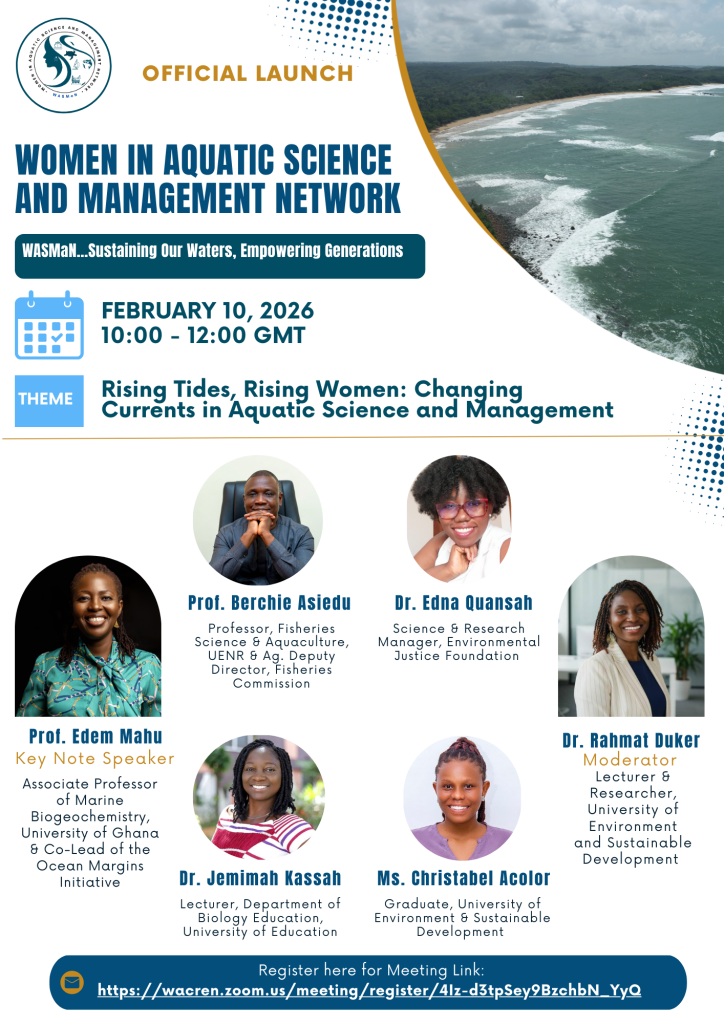
Speaking at the event, Dr. Alberta Sagoe, a founding member of WASMaN, emphasized the importance of creating a platform that amplifies women’s voices and contributions in the sector. She noted that, “WASMaN was established to provide a space where women can actively contribute to research, policy, and decision-making in aquatic science and management. Inclusive participation is critical to achieving sustainable outcomes”. The launch featured a keynote address by Prof. Edem Mahu, Associate Professor of Marine Biogeochemistry at the University of Ghana and Co-Lead of the Ocean Margins Initiative, who underscored the role of science and innovation in addressing emerging challenges in marine and coastal systems. She highlighted the need for collaborative and inclusive solutions to ensure long-term sustainability. A panel discussion on “Breaking Barriers: Women’s Role in Aquatic Science and Resource Management in Ghana”, moderated by Dr. Rahmat Duker, explored both the challenges and opportunities for women in the field, while calling for stronger institutional support and capacity development.
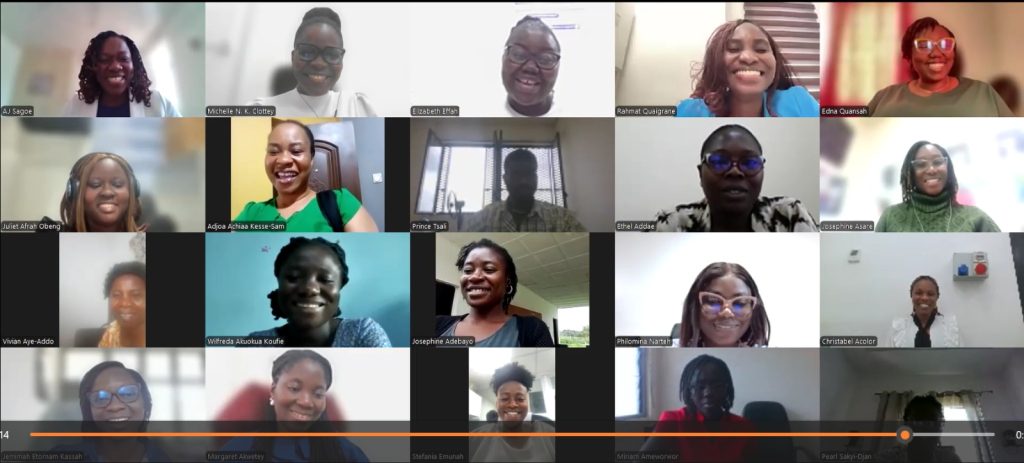
The event also marked the official unveiling of WASMaN, alongside a presentation of its planned activities, which include research collaboration, mentorship, policy dialogue, and community engagement. As Africa continues to prioritize sustainable ocean governance, WASMaN is expected to play a key role in shaping a more inclusive and resilient aquatic science and management landscape.